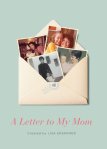
Mama’s Day

image.php

Not sure if it’s the high pollen count around here or what, but my eyes are watering something fierce over these incredible Mother’s Day cards from Strong Families.

OliviaE-Fuente-with-logo2-2

These vibrant and beautiful cards show families in every form.

Joy-Liu-Reading-with-logo

These cards celebrate the diversity and uniqueness that results when families are created (or chosen).

Mariana-breastfeeding-with-logo

These cards push back against the tired, stereotypical narrative of what it means to be a mother by sharing images of families who don’t usually have access to the tallest or loudest platforms.

Amaryllis-birthright-with-logo

So hop on over to Strong Families’s card generator – pick your favorite and add your own special message (like I did to the one up top), and send it to a special mama in your life!

Also – if you’re looking for some suggestions for alternative Mother’s Day gifts, I’ve written up a list for The Frisky. Spoiler alert: it does not contain advice on brunch, jewelry, or spa days. So, please – check it out and share some other ideas in the same vein if you have them!

Yes, Share.

I just read Randi Zuckerberg’s HuffPo piece, “My Son Wears Pink: To Share or Not To Share?” and it took me a bit to figure out why it didn’t sit quite well with me. Zuckerberg takes on the question of whether or not it’s in our children’s best interest to publicly share photos of them that fall outside the “norm.”

Childhood is a time to experiment, to make mistakes, to be silly and creative, and to use your imagination. I know there are a lot of things I did in my childhood that are (thankfully) in a photo album somewhere in my parents’ basement, instead of permanently cached online. For example, I wore a full-body Darth Vader Halloween costume when I was just a little too old for it to still be cute. A great memory, but looking back, I’m glad it’s not part of my online identity.

And fair enough. We all have embarrassing photos we’d prefer never saw the light of day. However, it’s Zuckerberg’s presumption over *what* we should protect our children from that is the issue. Zuckerberg is specifically referencing a post about a woman who shares pictures of her 6-year-old son dressed up in tutus, make-up, nail polish and dresses. She wonders whether this mother is thinking about the potential ramifications these pictures may have on her son later in life.

I, on the other hand, am thinking about the potential ramifications of not sharing them.

Before I get into this further, I’d be remiss if I didn’t note that the 6-year-old boy in question is referred to as a “cross-dresser” throughout Zuckerberg’s post as well as the one she links to (note: the mother of the child did not refer to her son as such). It seems completely out of place to ascribe this adult term to a child who likes to play dress up. Kids – amazingly – enjoy playing dress up. Whether that means a young girl dressing up like Captain Hook (is she a cross-dresser?) or another child dressing up like Lotso Huggin Bear from Toy Story 3 (should we start labeling those kids “Furries?”) – it’s all just dress up. It’s fun! It’s silly! It’s creative! It’s childhood! So, can we please lose the labels? That would be a great place to start.

If we didn’t have such strict and stringent gender codification in our society, then pictures like this would be as innocuous as the mom who posts pictures of her son playing soccer or of her daughter playing with dolls. It’s only because these pictures step outside the norm that they become questioned.

Maybe – and just hear me out – instead of suggesting that we *don’t* share these pictures over fear that it will damage our children somehow, we actually share more of them in hopes of normalizing and accepting these types of things. SO much pressure is put on the whole “BUT WHAT DOES IT MEAN” part when a child happens to travel outside his or her traditional gender box. Some times it could mean a lot. It could possibly mean that the child in question is challenging their gender identity and there is truly something deeper going on. But for many children who step outside these incredibly rigid gender lines, it just means they enjoy bold, beautiful colors, or sparkles, or being fancy, or materials that feel nice and special.

Being a “pink boy” doesn’t have to mean anything beyond being a boy who happens to love pink. It’s adults who put the larger significance on it. When Zuckerberg lumps dressing up outside gender norms along with “making mistakes” of childhood, she’s placing a (negative) value on it, when it is simply just another part of a child’s life, along with digging in the dirt, reading books, playing sports, etc…

Zuckerberg says, “It’s a fantastic thing to be proud of your child. We should always love and support our children no matter what, and we should applaud parents who bravely support their child in the face of society telling them otherwise. But it’s one thing to capture an adorable moment and send it to a few close friends and family. It’s another thing entirely to send it out into the void of the Internet, without thought of future repercussions.”

Would she say the same thing to the mother who posts a picture of her little girl dressed up for a ballet recital?

I’m thinking of “future repercussions.” I’m thinking that posting pictures like these – showing kids having fun and being creative – sets a precedent that children have the ability to express themselves freely. These pictures also help challenge the status quo, so that the next time a little boy happens to paint his nails or wear pink, it isn’t cause to stop the presses, make a huge deal of it, and question the child or the parents. It would be just another kid, doing things that some kids just happen to do.

So, I say… Share! I’m not advocating sharing anything that would embarrass your kid, of course. But I also don’t agree that stepping outside gender norms is embarrassing or troubling at all. So share your child being his or her self – whether that be knee-deep in dirt or waist high in tutus (or rocking pink crocs & a purple hoodie while walking down the street with his dad… As the case may be).

20130506-155206.jpg

No More #Fakebook – A Chat With Sarah Tuttle-Singer

A few weeks ago, my friend Sarah wrote a post for Kveller.com that quickly went viral. Her post, Why We Need to Quit Telling Lies on Facebook is equal parts hilarious and thought provoking and most importantly, oh-so-real. Sarah, who is one of the contributors to my upcoming book, sat down with me for a chat about her post where we talked about Facebook/Fakebook, being “Pinterest perfect” and the importance of having our real selves represented. 
Avital: So I have to ask – what prompted you to write your #NoMoreFakebook post?

Sarah: Jordana Horn wrote an interesting post on Kveller.  She’s a talented writer with an interesting take on parenting and on life in general, and normally I find myself agreeing with her. But not this time. I understood her point, but I felt this ‘kvetch’ in my stomach, and I commented: Yes, it IS cool to brag about your kids. Or your job. Or your hooker boots. But maybe – just maybe – more of us should try to keep it real on Facebook, too. Just like Hollywood can mess with our heads about “true love,” Facebook can do a number on our self-esteem as parents. (Methinks I have a blogpost for Kveller.com :) ).

And there it was.

I had no idea what to do with the idea until I realized I was living the post.”Write about what you know,” people say – and that’s what I try to do. I write about being an expat in Israel. I write about divorce and fringe parenting (I was a noncustodial mother for a while.) I write about the things I’ve lived – the ugly and the exquisite. And so, after surviving another Saturday with my kids, I realized that THERE was the premise.

Avital: Yeah, I remember you asking for “lies” we tell on Facebook.

Sarah: YES. I crowd sourced. I love crowdsourcing. I love writing WITH an audience – not just for an audience. In fact, when I write, I usually write with a friend — someone who I send the post to as I go along. That person becomes my muse.

Avital: Well, it certainly worked with this post. It resonated with a TON of people!

Sarah: I’m thrilled by the reaction.

Avital: Why do you think people connected to it so fiercely?

Sarah: I think a few things worked for this post:

1. we are all the imperfect parents of imperfect children.
2. anyone who says they LOOOOOOVE being with their kids 24/7 is either lying or had a labotomy
3. I framed the post around my experience — my fuckups.

Avital: Yeah, there was definitely a feeling of – been there, done that. At least one my end as a reader. We need way more of that for sure.

Sarah: Actually, that’s why Im surprised by the tremendous reaction: I figured people would read this and think to themselves “yeah, been there done that. what’s her point?”

"Thursday. In varying degrees of joy and frustration" via Sarah's FB page

“Thursday. In varying degrees of joy and frustration” via Sarah’s FB page

Avital: We’re exposed to so much online – we’re all plugged in whether for work or pleasure or just because we don’t know what to do otherwise. So we’re bombarded with all these images – whether from Facebook, Instagram, Pinterest of “perfection.” It can be overwhelming.

Sarah: Yes. Yes yes yes yes yes. And I think envy is a totally natural response to it. Man, I wish I could rise about that, But when you find yourself wanting to compete against perfection, it’s exhausting.

Avital: Totally exhausting. And it only feeds into the self-doubt and internal judgment that is already present for many of us. Or at least…present for me.

Sarah: Yup. It isn’t JUST the pictures of families, or the sweet status messages. It’s also the stuff people are posting – the “organic foods” articles (While my kids eat Doritos), or the articles about brain development and tv (while my kids watch a Simpsons DVD).

Avital: I’m trying to dig back to the dark ages – how did people do this before the internet?

Sarah: PTA meetings. Brownie meetings. My mother HATED those.

Avital: Yeah, although at least with those – you could leave them for the most part when the event was over. Now, it feels like no escape unless you actively unplug (and who likes to do that? ha!)

Sarah: She and her close friend who lived on the other side of the country used to joke that they were the only ones who didn’t wax their legs. She kept it real – before “keeping it real” was a catchphrase. She’d show up to these meetings in a headscarf like a babushka, she never wore makeup, she didn’t give a good godamn. Well, at least i don’t think she did. She died before i could realize tha tmaybe she did care.

Avital: That’s the thing – we never know what sort of front folks are putting up. It sounds like your mother was incredibly genuine though, from everything you’ve shared about her.

Sarah: I’d like to think she was – from the grit under her nails from gardening, to her bare lashes.

Avital: But I do wonder what the tangible ramifications are of being exposed to all this “perfection” and trumped up ideal what is “good.”
I feel like that might be a perfect segue to another essay you wrote.

Sarah: we up the ante on ourselves.

#NoMoreFakebook via Sarah's FB

#NoMoreFakebook via Sarah’s FB

Avital: On my end – I got so fed up with all these supposed images of what the ideal good mother was that it made me want to scream and tear my hair out. Instead, I decided to write a book(I happen to like my hair). The more I thought about it, the more I thought it would be more powerful to include stories from many women – all sharing their stories in hopes of breaking down this “good mother myth.” Sort of like your #NoMoreFakebook crusade

Sarah: I think we have a new hashtag, mama: #goodmothermyth

Avital: Lets rip back the curtain and let our real selves shine through. As I was slugging through the whole book proposal process, one of the things that kept me going was the hope that somewhere, one day, a new mom would be in a bookstore and find this book and connect with one, two, or many of the essays within it. And then she would realize that she wasn’t alone. And that she’s good, dammit.

Sarah: yes!

Avital: Even if she doesn’t have a Pinterest perfect life.

Sarah: I love that line – “a pinterest perfect life.”

Avital: Thanks. I mean, I have a Pinterest account. I dig the concept as much as the next gal, but… I use it with a hefty dose of reality. It would also help if corporate media didn’t keep pushing this myth as well.

Sarah: …and freaking Hollywood.

Avital: Fueling the “mommy wars.” Just today somebody I know wrote a thoughtful analysis about Sheryl Sandberg and “leaning in” and the editors chose to run with a title that included “mommy wars” when it really didn’t have much to do with the premise. So frustrating.

Sarah: hate. it.

Avital: How do we overcome this? We need to raise up our voices. Reclaim the way our stories are being told.

Sarah: We have to use humor. What we don’t want to do is to sound like clamorous harridans (I’m misspelling something somewhere).

Avital: But I think sometimes the truth isn’t always funny.

Sarah: Because there are sweet moments of motherhood that should not be overlooked – but by sharing the rough stuff, we allow those moments to really sparkle.

Avital: And that’s okay too.

Sarah: Indeed.

Avital: Really, I would just love to see ownership and promotion of real stories of motherhood/parenting that are vehicles for (not so) subtle judgment or competition.

Sarah: But you know what might happen? We all might try to outdo eachother with keeping it real.

Avital: Oy.

Sarah: “Oh, you have a sink full of dirty dishes? Well, I’ll see you your dirty dishes and raise you a clogged toilet, biotch!”

Avital: Is there anyway to… not “win” necessarily, but just come out unscathed?

Sarah: i wonder if there’s something hardwired in our nature that makes this so. And no, not everyone is like that — but i’m seeing it already.

Avital: Did you see any reactions like that re: your #NoMoreFakebook post?

Sarah: Not yet.

Avital: I’m just glad that your post got the reaction it did. Makes me hopeful that others are fed up, like me, and ready to scream out their realities – regardless of whether they’re pretty or not.

Sarah: I’m hopeful, too – and I think that even off the walls this could lead to more meaningful friendships between people.

Avital: That would be lovely.

Sarah: Hey, we’re talking. We built a friendship online out of this premise – your book. What I mean is we nurtured a friendship that germinated from the premise of your book, The Good Mother Myth.

Sarah and I talked for a bit more after this, but this was the meat of it all. The big thing from – that I took from Sarah’s post and that propelled me to create the book, was this idea that we’re constantly being inundated by messages of “perfection” and what is “good.” It’s enough to drive anyone to an early grave. What about you? What’s your reality? How do you not cave to the various messages hurled at us on a daily basis?